 Skip to content


Are House Centipedes Dangerous?
Seeing a house centipede race across the bathroom floor can be unsettling. With numerous legs, fast movement, and venom used to capture prey, these insects can look much more threatening than they really are.
So, are house centipedes dangerous? In most cases, no. House centipedes are generally considered harmless to people, pets, and the structure of your home. They typically avoid humans and would rather escape than confront you. Bites are possible, but they are uncommon and usually occur only when a centipede is trapped or handled.
Interestingly, these creepy-looking visitors may also be helping control other pests in your home.
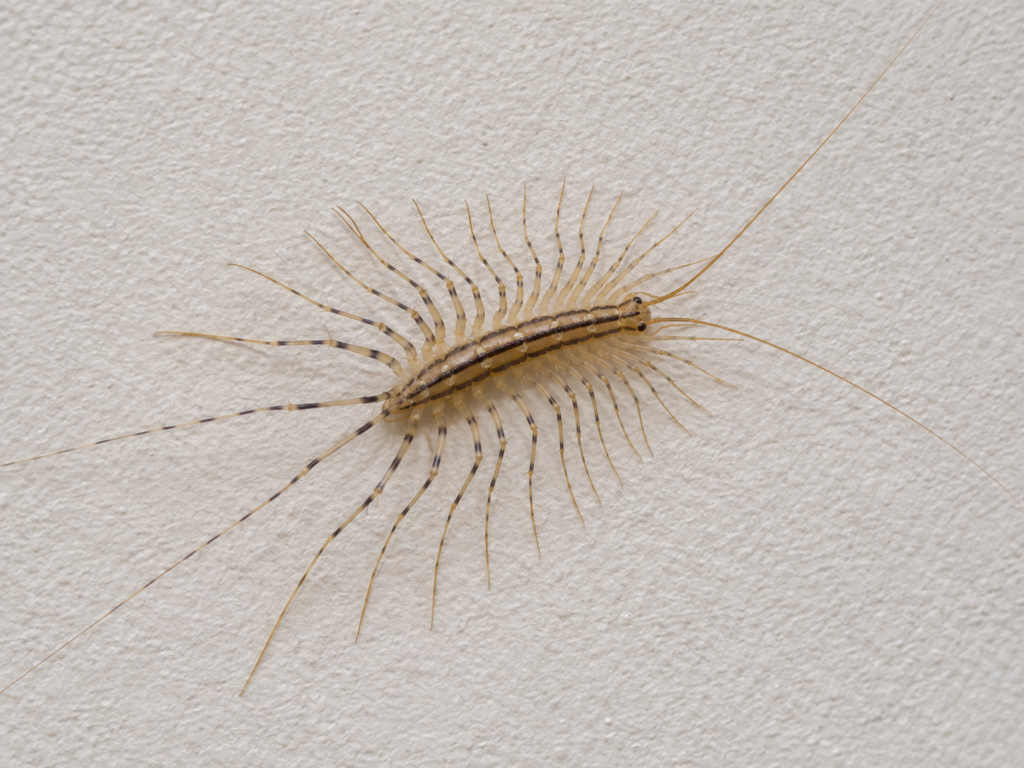
Are House Centipedes Dangerous to Humans?
House centipedes are venomous, but that does not mean they are dangerous to people. They use venom primarily to immobilize small insects they hunt.
House centipedes are naturally shy and usually run for cover when they encounter people. Their venom-delivering front appendages are adapted for capturing small prey rather than attacking humans.
Do House Centipedes Bite?
Yes, house centipedes can bite, but bites are rare. A bite is most likely to occur when a centipede is picked up, trapped against the skin, or otherwise threatened.
If a bite does occur, symptoms are generally limited to the area around the bite.
What Happens If a House Centipede Bites You?
Possible symptoms can include:
- Mild localized pain
- Redness
- Swelling
- Itching or irritation
For most people, these symptoms are minor and temporary. More significant reactions are uncommon, although sensitivity can vary from person to person.
Are House Centipedes Dangerous to Pets?
House centipedes are not generally considered a serious threat to household pets. Their venom is intended for much smaller prey.
However, curious cats or dogs may try to paw at or eat a centipede. Preventing pets from playing with unfamiliar insects is still a sensible precaution, particularly if your pet develops unusual swelling, irritation, or other symptoms afterward.
Do House Centipedes Damage Your Home?
Unlike termites, carpenter ants, and some other household pests, house centipedes do not feed on the structure of your home.
They do not normally:
- Chew wood
- Damage fabrics
- Eat stored food
- Build destructive nests
Their presence is usually more of a nuisance than a source of property damage.
Are House Centipedes Good for Your Home?
Although most homeowners would prefer not to see them, the answer to whether house centipedes are good is surprisingly often yes.
House centipedes are predators that feed on other small household pests.
What Do House Centipedes Eat?
Their prey can include:
- Cockroaches
- Silverfish
- Spiders
- Flies
- Moths
- Other small insects
This is why house centipedes are sometimes described as natural pest control.
However, regularly seeing house centipedes can also signal that your home provides enough food and suitable conditions for them to remain there.
Why Are House Centipedes in Your Home?
House centipedes usually enter or remain in homes because they can find food, moisture, and shelter.
Moisture and Damp Conditions
House centipedes favor humid environments. Common hiding areas include:
- Basements
- Bathrooms
- Crawl spaces
- Laundry rooms
- Utility areas
Leaks, excessive basement dampness, or other moisture problems can make these areas more attractive. Griggs & Browne’s Integrated Pest Management guidance similarly identifies excessive basement dampness, leaky plumbing, and unsealed openings as conditions homeowners should address when reducing pest activity.
Other Insects Provide a Food Source
If house centipedes repeatedly appear indoors, they may be finding other insects to hunt.
That means the centipede itself may not be the main issue. Its presence can be a clue that another pest population is providing a reliable food source.
Should You Get Rid of House Centipedes?
Seeing an occasional house centipede usually is not cause for alarm. Because they prey on other insects, a single centipede can even be beneficial.
Repeated sightings deserve more attention.
Rather than simply killing the centipedes you see, look for the conditions attracting them. Reducing moisture, sealing gaps around doors and foundations, repairing screens, and addressing other insect activity can help make your home less appealing.
When Should You Call a Pest Control Professional?
Consider professional pest control if you are seeing house centipedes frequently, finding them throughout several rooms, or noticing other pests at the same time.
The goal should be to identify the underlying conditions—not simply remove the centipede you happen to see.
Griggs & Browne provides pest-control services throughout Southeastern Massachusetts, Cape Cod, Rhode Island, and Connecticut. A professional inspection can help identify pest activity, moisture-related conditions, and entry points that may be contributing to recurring problems.
Frequently Asked Questions About House Centipedes
House centipedes generally avoid people and are unlikely to approach someone intentionally. However, if their presence makes you uncomfortable, remove the centipede and investigate why they are entering the room.
Not necessarily. House centipedes eat other household pests. Frequent sightings, however, are worth investigating because they may indicate moisture or another insect problem.
House centipedes are venomous, not poisonous. They use venom to subdue their prey, but they are generally not considered dangerous to humans.
Not always. One centipede may simply have wandered indoors. Multiple or recurring sightings can indicate favorable moisture conditions or an available population of insects for them to feed on.
The Bottom Line: Are House Centipedes Dangerous?
For most homeowners, the answer to whether house centipedes are dangerous is no. They rarely bite, do not normally damage homes, and can actually reduce populations of other insects.
But if you are seeing them repeatedly, don’t ignore what their presence may be telling you. Moisture, entry points, or another pest problem could be creating the conditions that keep them around.
