

How to Get Rid of Ants in the House: A Complete Guide
Few household pests are as persistent as ants. One scout finds a crumb on your counter, and within days a steady trail is marching across the kitchen. The good news: most ant problems can be brought under control with the right combination of sanitation, exclusion, and targeted treatment.
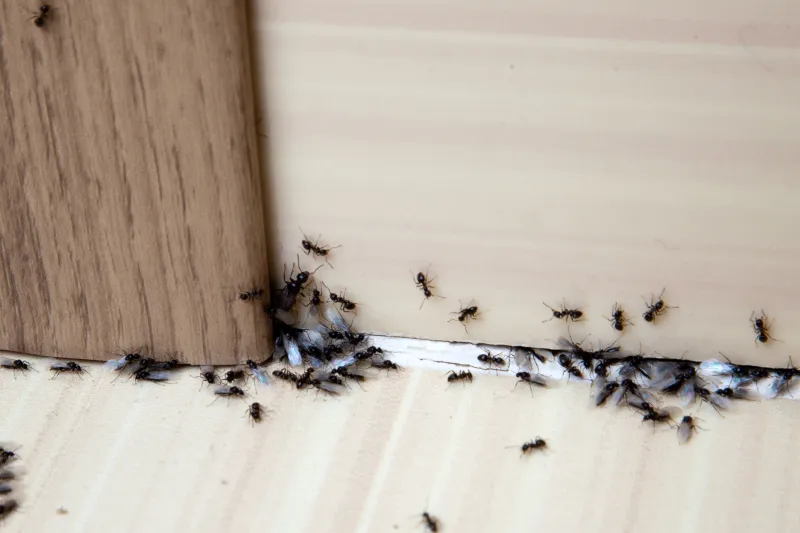
Why ants get into your house
Ants invade for two simple reasons: food and water. Kitchens, pet bowls, sticky spills, and leaky pipes all draw them in. In New England, spring rains and dry summer stretches both push ants indoors as they search for moisture and easy meals. Understanding what’s attracting them is the first step to getting them out.
Identify the ant you're dealing with
Not all ants are the same, and treatment depends on the species. Tiny ants trailing to sugar are likely odorous house ants or pavement ants. Large black ants near wood, windowsills, or sawdust-like shavings may be carpenter ants — a species that damages wood and needs professional attention. Correct identification prevents wasted effort on the wrong approach.
Step 1: Cut off food and water
Wipe counters, sweep floors, and store food in sealed containers. Rinse recyclables, cover pet food, and fix dripping faucets. Removing the reward is often enough to break a light trail on its own and makes every other step more effective.
Step 2: Seal entry points
Ants exploit the smallest gaps. Caulk cracks around windows and doors, seal utility penetrations, and trim shrubs and mulch back from the foundation. Exclusion is the most durable fix because it stops new colonies from following the same path in.
Step 3: Use bait, not just spray
Contact sprays kill the ants you see but leave the colony intact — and can actually make some species scatter and split. Slow-acting baits work better: foragers carry the bait back to the nest, wiping out the queen and colony over several days. Place bait along trails and resist the urge to also spray nearby, which repels ants from the bait.
When to call a professional
If the trail keeps returning, if you see large black ants or sawdust-like frass, or if ants are coming from inside walls, it’s time for a professional inspection. Carpenter ants in particular can cause structural damage and are difficult to eliminate without locating the nest.
Get Professional Help from Griggs & Browne
If pests have you outmatched, Griggs & Browne Pest Control can help. Serving New England homeowners since 1910, our licensed team solves the problem at the source — with a service guarantee. Request a free quote through griggsbrowne.com.