 Skip to content


Silverfish Pest Control in Southern New England
Silverfish are small, wingless insects that prefer dark, humid, undisturbed areas. In Southern New England homes, they are often discovered in basements, bathrooms, kitchens, laundry rooms, closets, attics, and storage areas where moisture and suitable food sources are available.
Effective silverfish pest control involves more than killing the insects you see. Long-term control focuses on reducing moisture, removing food and hiding places, sealing potential entry points, and treating active areas when necessary.
For homeowners across Southeastern Massachusetts, Cape Cod, Rhode Island, and Connecticut, understanding why silverfish appear is an important first step toward keeping them under control.
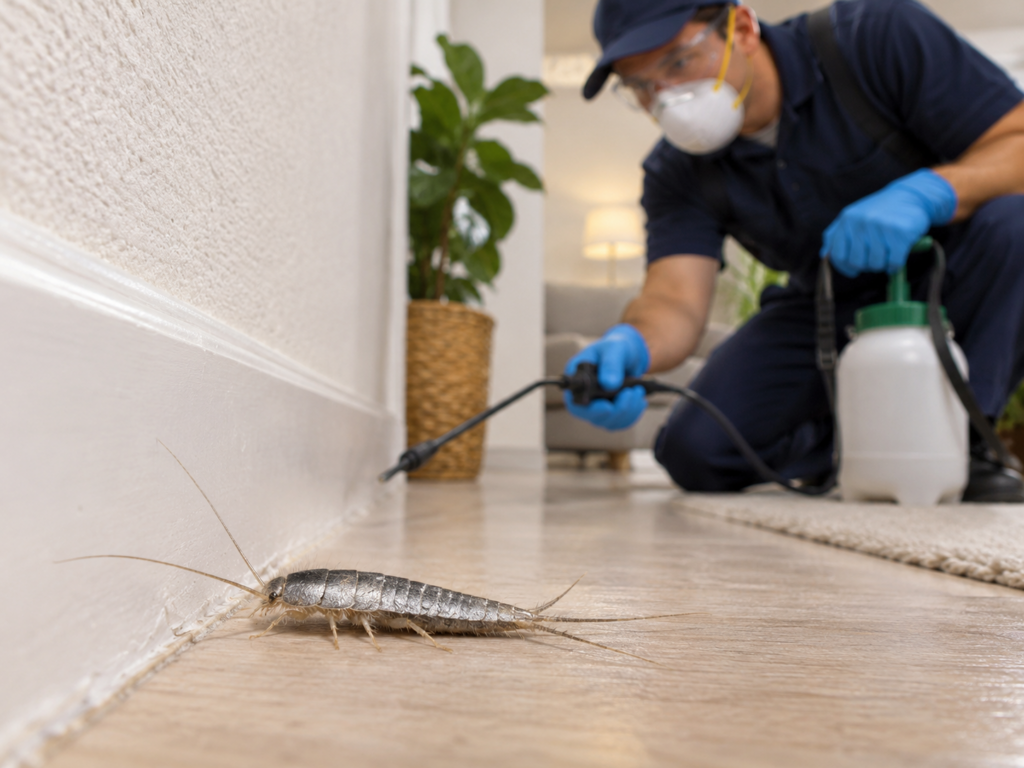
Why Are Silverfish Common in Southern New England Homes?
Silverfish need moisture to survive. Southern New England properties can provide favorable conditions through humid weather, damp basements, plumbing leaks, poor bathroom ventilation, condensation, or moisture around foundations.
They commonly hide around:
- Basements and crawl spaces
- Bathrooms and laundry rooms
- Kitchen cabinets and sinks
- Closets and storage rooms
- Baseboards and wall voids
- Boxes, books, documents, and stored fabrics
Silverfish also feed on materials containing starches and carbohydrates, including paper, cardboard, book bindings, wallpaper adhesives, cereals, flour, and some fabrics.
Signs of a Silverfish Infestation
Seeing one silverfish does not always indicate a serious infestation, but repeated sightings can signal favorable conditions nearby.
Watch for silverfish appearing at night, insects hiding beneath boxes or stored materials, feeding damage to paper or books, and activity in several damp areas of the home.
How to Get Rid of Silverfish in Your Home
Successful silverfish bug control starts by making your property less attractive to these moisture-loving pests.
1. Reduce Moisture and Humidity
Check bathrooms, kitchens, basements, and utility areas for leaking pipes, condensation, standing water, or excessive dampness.
Using exhaust fans and dehumidifiers can help reduce indoor humidity. Plumbing and gutter leaks should also be repaired so they do not continually create damp conditions.
Moisture control is particularly important in basements and lower levels of Southern New England homes.
2. Remove Food and Hiding Places
Store flour, cereal, grains, and similar dry foods in airtight containers.
Reduce cardboard clutter and keep books, documents, photographs, and fabrics in dry storage. Plastic storage containers can provide better protection than cardboard boxes in moisture-prone basements.
Regular vacuuming around baseboards, closets, storage rooms, and dark corners also helps remove food particles and debris.
3. Seal Cracks and Gaps
Silverfish can hide in extremely small spaces.
Inspect and seal gaps around:
- Baseboards
- Plumbing penetrations
- Utility lines
- Windows and doors
- Foundation openings
- Wall cracks
Sealing these areas reduces potential hiding places and supports broader pest-prevention efforts.
What Kills Silverfish?
Several methods are commonly used for silverfish pest control, depending on where the insects are active and how extensive the problem has become.
Diatomaceous Earth
Food-grade diatomaceous earth is sometimes applied to appropriate dry cracks and crevices. It works by damaging the insect’s protective exterior and contributing to dehydration.
Boric Acid and Silverfish Baits
Boric-acid products and insect baits may be used in protected areas where silverfish travel or hide.
Any pest-control product should always be used according to its label, particularly in homes with children or pets.
Residual Insecticide Treatments
For more persistent activity, targeted insecticide treatments may be applied to cracks, crevices, baseboards, entry points, and other silverfish harborage areas.
Treating visible insects alone, however, may provide only temporary relief if excess moisture remains.
How Do You Permanently Get Rid of Silverfish?
There is no single spray or household remedy that can replace correcting the conditions supporting an infestation.
Long-term silverfish bug control usually requires a combination of:
- Reducing humidity
- Repairing water leaks
- Removing excess cardboard and clutter
- Protecting paper and stored foods
- Sealing gaps and hiding places
- Treating established activity
- Monitoring for recurring silverfish
The goal is not simply to kill individual insects but to make the property less suitable for them.
How to Prevent Silverfish in Southern New England
Prevention is especially valuable in moisture-prone homes throughout Massachusetts, Rhode Island, and Connecticut.
Keep basements as dry as possible, improve ventilation in bathrooms and laundry areas, repair leaking plumbing, clean gutters, address rotted or damp wood, and avoid excessive storage against basement walls.
Food should be sealed, paper products should be kept dry, and cracks around foundations, doors, windows, pipes, and utility openings should be addressed.
These steps support an Integrated Pest Management approach by correcting the conditions that allow pests to remain active.
When Should You Call a Professional for Silverfish Control?
Professional treatment may be appropriate when silverfish repeatedly return, appear in multiple rooms, damage stored belongings, or remain active despite moisture reduction and sanitation.
A pest-control professional can inspect the property to determine where silverfish are hiding and identify moisture, structural, or storage conditions contributing to the problem.
Professional Silverfish Pest Control in Southern New England
Griggs & Browne has provided pest-control services in New England since 1910 and serves communities throughout Southeastern Massachusetts, Cape Cod, Rhode Island, and Connecticut.
Rather than focusing only on the insects you can see, professional pest management can help identify conditions contributing to continued activity and determine an appropriate treatment strategy for your property.
If silverfish are becoming a recurring problem in your Southern New England home, contact Griggs & Browne to request an inspection or pest-control service.
Frequently Asked Questions About Silverfish
Silverfish prefer humid environments, so dry conditions and reduced moisture make a home less favorable for them.
Moisture, dark hiding places, paper, cardboard, starches, stored food, and other suitable materials can contribute to silverfish activity.
Silverfish are primarily nuisance pests, but infestations can damage books, paper, documents, wallpaper, fabrics, and stored household items.
Basements commonly provide the humidity, darkness, storage clutter, and hiding spaces silverfish prefer. Addressing moisture is often an important part of controlling the problem.
