

Rodent Control in Connecticut for Mice and Rats, Backed by 100+ Years
Rodents in your home or business? Griggs & Browne delivers complete rodent control in CT for both mice and rats, with an inspection-first process trusted across New England since 1910. Call 800-962-3296 for a free quote.
Rodents are among the most persistent pest problems Connecticut property owners face, and they rarely stay in one spot. Mice and rats damage insulation, gnaw wiring (a genuine fire risk), contaminate food and surfaces, and reproduce fast enough that a minor sighting can become a serious infestation within weeks. Left alone, a rodent problem gets larger and more expensive, not smaller.
Griggs & Browne’s Connecticut rodent program goes beyond bait and traps. Working from our Waterford branch, our licensed technicians inspect the property, treat active infestations, and target the entry points rodents rely on, then monitor to make sure they stay gone.
What Is Rodent Control?
Question: What is rodent control?
Rodent control is the professional process of inspecting a property, eliminating an active mouse or rat infestation, and preventing future ones through exclusion and sanitation. Griggs & Browne uses Integrated Pest Management, which pairs targeted treatment with sealing entry points and correcting conditions (food access, clutter, moisture) that attract rodents in the first place. That combination is what separates lasting control from temporary knockdown.
Mice vs Rats: Which Rodent Do You Have?
Question: How do I know if I have mice or rats?
Mice leave small, scattered droppings and produce light gnaw marks, while rats leave larger droppings, cause heavier structural gnawing, and often travel along established runways. Identifying the species correctly shapes the treatment plan.
Factor | Mice | Rats |
|---|---|---|
Droppings | Small, rice-grain size | Larger, capsule shaped |
Common CT species | House mouse, deer mouse | Norway rat |
Typical entry | Gap the size of a dime | Gap the size of a quarter |
Nesting | Walls, attics, insulation | Burrows, basements, crawlspaces, lower levels |
Behavior | Curious, explores new objects | Cautious, avoids new objects |
For house-mouse-specific removal, see our dedicated CT mice exterminator page. This page covers the full rodent picture, including rats and commercial properties.
Why Rodents Thrive in Connecticut
Connecticut’s cold winters are the biggest driver. As outdoor temperatures drop, mice and rats move indoors seeking warmth, food, and nesting sites, which is why rodent calls spike in fall and winter (Source: NOAA). Several regional factors compound the problem:
- Older housing stock with fieldstone foundations, gaps at sill plates, and unsealed utility penetrations.
- Wooded and semi-rural lots that support deer mice and provide harborage near the home.
- Shoreline and denser town centers where food-service and multi-family properties create strong rat pressure.
- Attached garages, sheds, and woodpiles that act as staging areas next to living space.
Our Connecticut Rodent Control Process
- Comprehensive Inspection We identify the rodent species, locate entry points, runways, and nesting sites, and document contributing conditions.
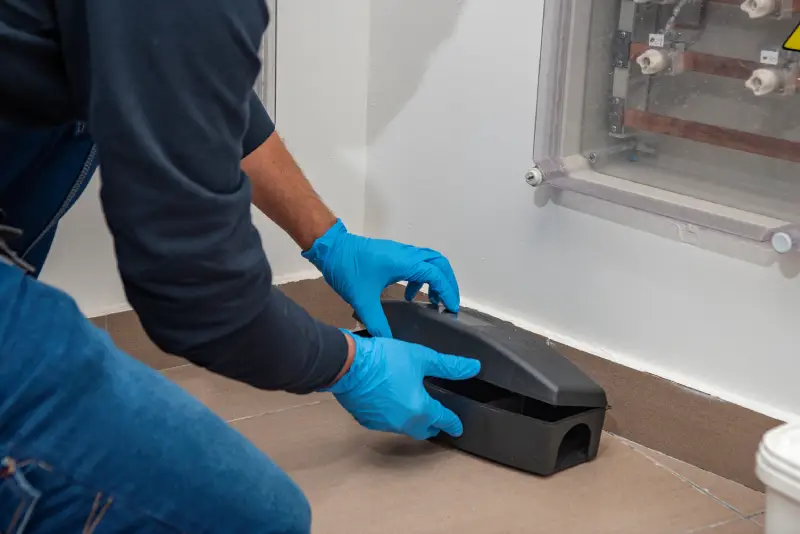
- Targeted Elimination Bait stations, traps, and treatments are placed strategically based on rodent behavior and travel patterns, not scattered at random.
- Exclusion We identify and recommend sealing gaps, cracks, vents, and utility openings, the step that actually keeps rodents out long term.
- Sanitation and Habitat Correction We advise on removing food sources, clutter, and harborage that draw rodents back.
- Ongoing Monitoring Recurring plans include repeat inspections that verify control and catch new activity early.
Commercial Rodent Control in Connecticut
Rodents are a compliance and reputation risk for Connecticut businesses. Griggs & Browne serves food service, healthcare, multi-family housing, and property management clients with discreet, documentation-ready rodent programs designed to hold up to inspection. We work around your operations to minimize disruption while keeping the property protected.
Why Choose Griggs & Browne for Rodent Control in CT
- Established 1910. More than a century of rodent experience across New England.
- Full-spectrum control. Mice, rats, residential, and commercial on one team.
- Exclusion-first. We seal entry points so rodents stay out.
- Local branch. Waterford-based technicians who understand CT housing and rodent pressure.
- Licensed and trained. Ongoing certification on safe, effective methods.
- Inspection-driven. Every plan is built on what we actually find on your property.
Connecticut customers consistently describe our technicians as honest and dependable. A Waterford client noted on Birdeye: “Darren, our technician is professional, timely, and friendly. We couldn’t ask for a better partnership.” Another shared that a technician “was straightforward and truthful, helped me figure out how to keep mice out of the attic.” (Source: Birdeye, Griggs & Browne Waterford CT)
What Costly Mistake Do Property Owners Make With Rodents?
Question: What costly mistake do property owners make with rodent control?
The costliest mistake is relying on bait or traps alone while leaving entry points open. Rodents keep coming back through the same gaps, and in the meantime they chew wiring (a leading cause of rodent-related structural and fire damage) and contaminate insulation and stored goods. For businesses, an unresolved rodent problem can also mean failed inspections and lost revenue. Professional exclusion addresses the root cause, so you stop paying to fight the same infestation over and over.
Health and Safety Risks of Rodents
Question: Are rodents in the home a health risk?
Yes. Rodents contaminate food and surfaces with droppings and urine and can spread bacteria and viruses, while their gnawing on wiring creates a documented fire hazard (Source: CDC). Rodent droppings and dander can also aggravate allergies and asthma. For food-service and healthcare properties in Connecticut, rodent activity is additionally a regulatory and reputational risk. This is why prompt, professional control matters, not just for comfort but for safety.
Rodent Prevention Checklist for Connecticut Properties
Question: How do I keep rodents out?
Prevention combines exclusion, sanitation, and habitat control. Work through this checklist, especially heading into fall:
- Seal gaps around pipes, vents, and utility penetrations (mice need a dime-sized gap, rats a quarter-sized one)
- Install door sweeps and repair damaged screens and weatherstripping
- Store food, pet food, and birdseed in sealed containers
- Keep garbage in tight-lidded bins and clean up spills promptly
- Move woodpiles, debris, and dense vegetation away from the foundation
- Declutter basements, garages, and storage areas that offer harborage
- Address moisture problems that attract rodents and other pests
Given the number of hidden access points in older Connecticut homes and commercial buildings, a professional inspection is the most reliable way to find and close them.
Key Facts: Rodents in Connecticut
- Rats can enter through a gap about the size of a quarter; mice through one the size of a dime.
- Rodent gnawing on wiring is a recognized fire hazard.
- Fall and winter drive peak indoor rodent activity in Connecticut (Source: NOAA).
- Rodents contaminate food and surfaces and can spread disease through droppings and urine (Source: CDC).
- Exclusion, not just baiting, is the key to lasting control.
Frequently Asked Questions
It depends on the species and infestation size. Control usually begins at the first visit, with full resolution over one or more visits combining treatment and exclusion. We provide a realistic timeline after inspection.
Yes. The Norway rat is present across Connecticut, especially near food-service areas, dense town centers, and properties with accessible garbage or harborage.
Rodent control covers all rodents, including rats and commercial settings, while a mice exterminator service focuses specifically on house mice. We offer both and recommend the right scope after inspection.
We use EPA-registered products in tamper-resistant bait stations and follow label safety guidance. Your technician will explain placement and any precautions.
Yes. We provide discreet, documentation-ready commercial rodent programs for food service, healthcare, and multi-family properties throughout Connecticut.
Not if entry points are sealed and sanitation is maintained. That is why our process emphasizes exclusion and habitat correction, and why ongoing plans include monitoring.
Connecticut’s cold season pushes rodents indoors. If they return each year, open entry points and nearby harborage are likely unresolved. A one-time inspection can pinpoint and close those gaps.
Connecticut Service Area
Griggs & Browne provides rodent control for homes and businesses throughout Connecticut from our Waterford branch, covering New London County and communities statewide. Call 800-962-3296 to confirm coverage for your address.
Take Back Your Property from Rodents
Rodents will not resolve on their own, and every week costs more damage. Call Griggs & Browne at 800-962-3296 for a free quote, or contact us online. You get complete Connecticut rodent control, an exclusion-first process, and over a century of proven experience.